Why "Stupid" Projects Are the Smartest Thing You Can Do
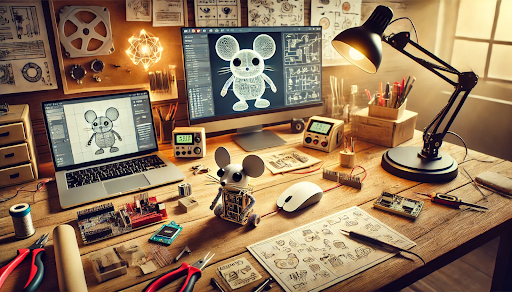
I recently came across a LinkedIn post where an engineer shared “the stupidest thing” she had made with her engineering degree. She had designed, 3D-printed, programmed, and tested a mouse (yes, an actual robot mouse) that mimicked Remy in Ratatouille. It sat on her head and used strands of her hair to mimic control of her hands, similar to what Remy did in the movie.
The project was quirky, inventive, and honestly, brilliant. But despite the creativity and effort she put in, she still called it stupid.
And I get it. I do the same thing.
Every time I write a blog, a small voice in my head whispers: Who even cares? This is pointless. Why are you wasting time on this? And I know I’m not alone.
How many of us abandon creative ideas or side projects because they seem “useless” or “a waste of time”? How often do we stop ourselves from experimenting because there’s no clear monetary value or career boost?
But what if these “stupid” projects are actually the smartest thing we can do for ourselves?
Key Takeaways
- Engaging in “stupid” or unconventional projects fosters creativity, problem-solving, and skill development.
- Many breakthroughs come from playful curiosity rather than rigid goal-setting, making side projects valuable.
- Dismissing our own work as “pointless” prevents us from recognising the long-term benefits of creative exploration.
The Hidden Power of ‘Playtime’
As kids, we played without purpose. We built LEGO castles, made up stories, and tried ridiculous experiments just for the fun of it. We didn’t care if anyone found value in it - because we did.
But somewhere along the way, adulthood trained us to believe that everything we do must be productive, profitable, or practical. Play became something frivolous, something to feel guilty about.
Yet research shows that play isn’t just for children - it’s a fundamental part of learning and innovation.
- Video game studies have found that players develop resilience because they keep trying new strategies after failure. When one approach doesn’t work, they adapt and experiment until they succeed.
- Psychologists studying creativit have shown that unstructured play leads to better problem-solving skills in both kids and adults.
- Business leaders and inventors often credit their greatest ideas (such as post-it-note) to seemingly “pointless” side projects.
The truth is, playing - whether through writing, coding, designing, or inventing strange robotic mice - keeps our minds flexible and sharp.
Why ‘Useless’ Projects Are Actually Useful
The engineer who made the Ratatouille mouse might not sell her invention, and I may never get thousands of readers on my blog. But that’s not the point.
These projects help us grow in ways we don’t immediately see:
We develop persistence. When we experiment without fear of failure, we build the mental endurance to keep going even when things don’t work out.
We learn new skills. Every creative project - no matter how small - forces us to research, think critically, and try new approaches.
We rediscover joy in learning. Doing something “just because” reminds us that learning doesn’t always have to be about productivity - it can be fun, too.
Reframing ‘Stupid’ as Smart
So, next time you catch yourself thinking, This is a waste of time, pause for a moment. Ask yourself:
- Am I having fun?
- Am I learning something new?
- Am I exercising creativity in a way I don’t get to in my daily life?
If the answer is yes, then your project isn’t stupid. It’s playtime with a purpose. And in the long run, that’s what keeps us growing.
So, go build that strange gadget. Write that blog no one asked for. Design something ridiculous. Play. You might be surprised by what you gain from it.
Your next ‘stupid’ idea might be the smartest thing you ever create!