← home | fictional examples
Fictional Examples Overview
Use this page to browse various examples. I used the Diátaxis documentation framework to structure the content for each.
Post-Trade Automation with Tokenisation and Blockchain
This example was created for a job interview with a fintech firm. The client wanted a focus on automation opportunities in post-trade operations, rather than blockchain for its own sake.
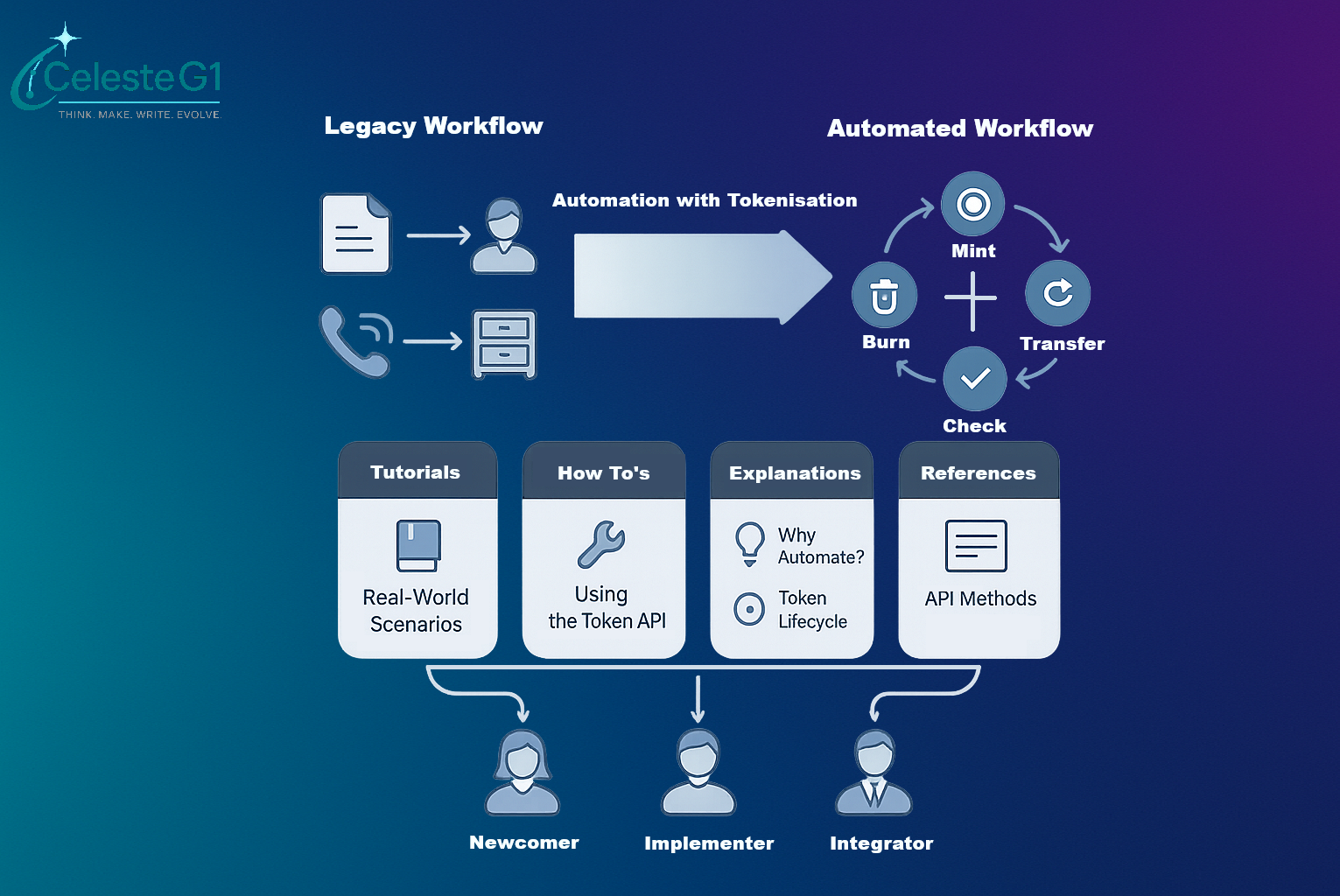
I've created the documents below to satisfy the requirement and keep the focus on post-trade automation:
- Explanation (top-level): How post-trade works today and how automation maps onto it.
- Explanation (sub-level): How the tokenisation workflow works (mint, burn, read, update).
- How-To's: Four individual How-To's as a walkthrough of each tokenisation workflow step.
- Reference (API): An outline of fake but plausible API calls to support the tokenisation workflow.
- Reference (Concepts/Definitions): Definitions to clarify terminology for users.
- Tutorial/Guide: Not included. But would outline process flows such as a "Getting Started Guide" or distinct A-Z post-trade process-flows such as "A complete guide to automate vanilla swaps post-trade".
- Supporting documentation: Not included. But would outline Security, Compliance and Legal documentation.
By aligning with Diátaxis, I was able to show an understanding of audience needs:
- Business/product stakeholders: Focus on post-trade automation and its benefits.
- Developers: Needed technical clarity and examples of how tokenisation works.
- Token Lifecycle: Learn how tokens are minted, transferred, queried, and burned throughout their lifecycle.
- How-To Guides: Step-by-step examples with code snippets for each major token operation.
- API Reference Guide: Detailed overview of endpoints, request payloads, and response formats.
- Glossary of Key Concepts: Definitions and explanations of common terminology used throughout the docs.
Understanding Quant Models for Fraud Detection (No Math Degree Needed)
This example was created for a FinTech firm that wanted to explain quant models to clients who may not have math degrees.
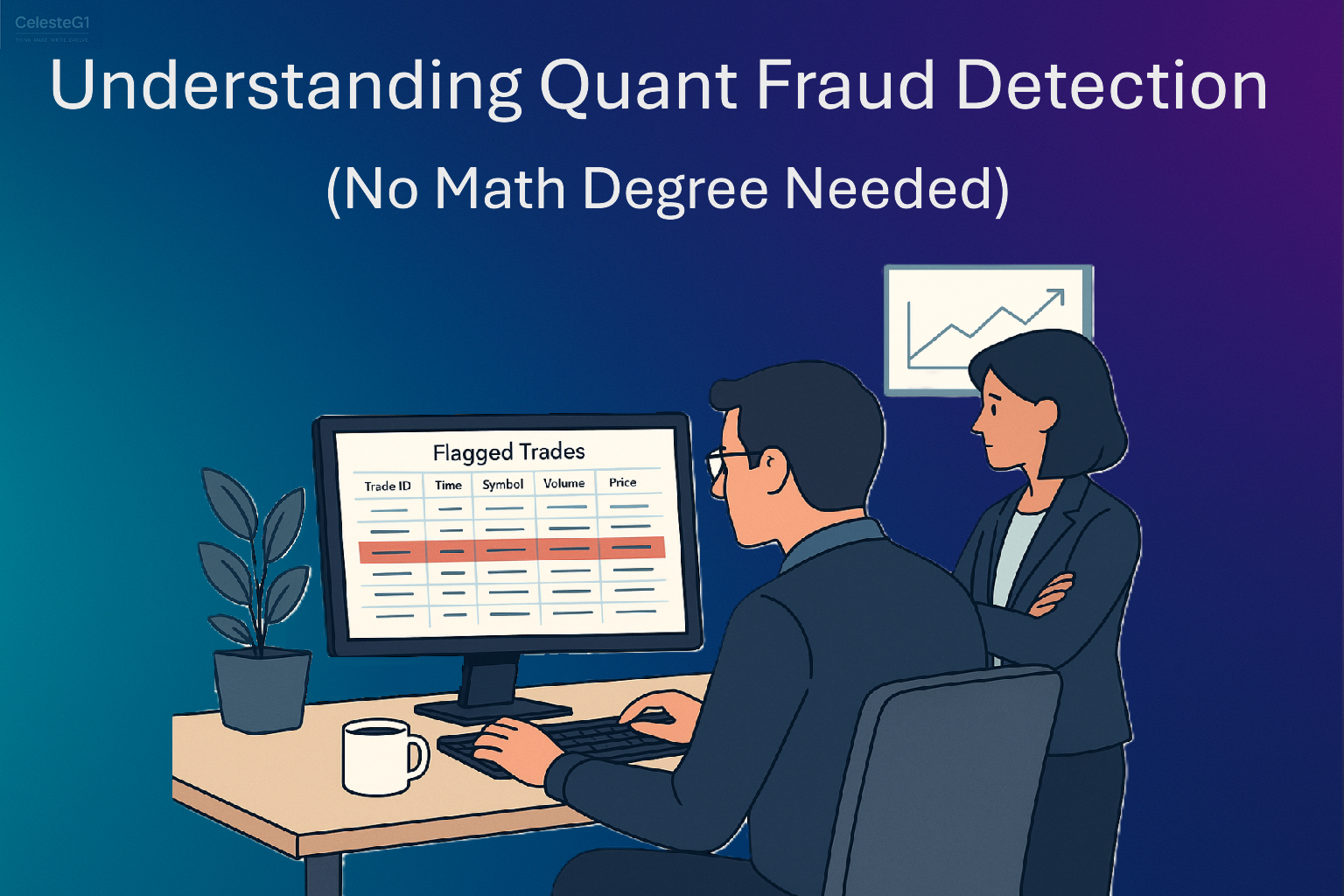
The following documents were created to meet that goal, focusing on gradually deepening the topic without overwhelming the reader with complex terminology:
- Introduction to Understanding Quant Models for Fraud Detection (No Math Degree Needed): A landing page to help users find the information they need.
- Trading Fraud and Detection Models: A top-level page, mapping models to different types of fraud. It also provides a high-level overview of how models are trained, how they work together, and the typical process flow; from a client submitting post-trade data to Company-X to receiving a report.
- Understanding How Logistic Regression Calculates Probabilities: Explains the logistic regression formula from the client's perspective. Less math, more focus on what each part of the formula means in practical terms.
- Tutorial: Using the Logistic Regression Formula with Sample Data: A tutorial using fictional but realistic data to demonstrate the formula in action.
- How to Explain Model Outcomes Without Sharing Internal Logic: A guide on how to communicate quant model results without disclosing proprietary information.
By aligning with the Diátaxis framework, I was able to address the distinct needs of different audiences:
- Clients: Emphasis on input and output values, with real-world examples to illustrate concepts, rather than diving into complex math.
- Report Creators: Guidance on what and how to communicate to clients when internal model logic must remain confidential.