Please Remember...
This is a fictional example and not real documentation. The purpose is to demonstrate my technical writing.
← fictional examples overview | quant models (explanation)
Introduction to Understanding Quant Models for Fraud Detection (No Math Degree Needed)
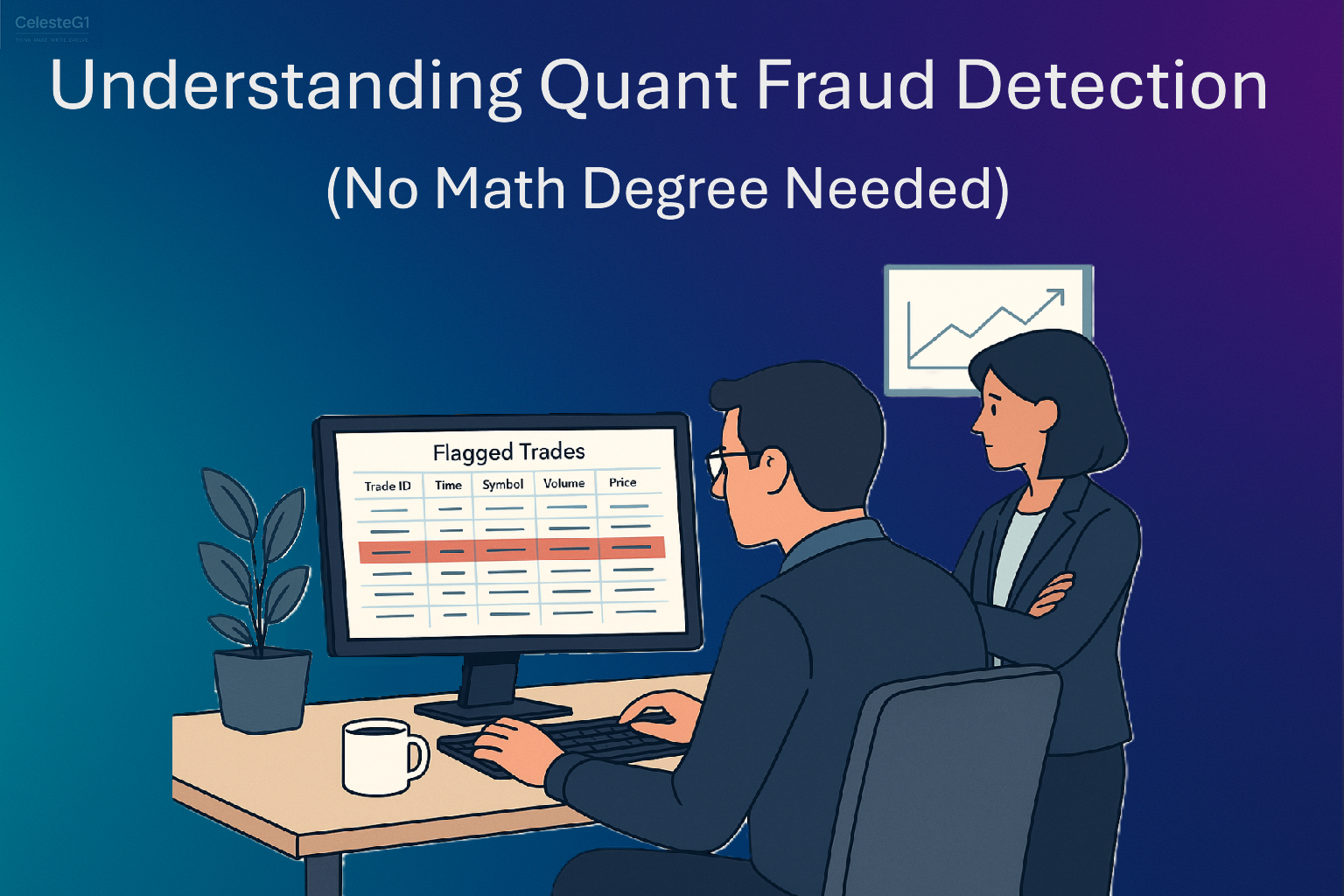
This section is for non-maths users.
It explains how quant models help detect fraud, without needing a maths degree. We’ll walk you through how the models work, what the key parts of each formula mean, and why certain trades get flagged, and we'll do it all in plain English.
This guide covers:
- Trading Fraud and Detection Models: A top-level page, mapping models to different types of fraud. It also provides a high-level overview of how models are trained, how they work together, and the typical process flow; from a client submitting post-trade data to Company-X to receiving a report.
- Understanding How Logistic Regression Calculates Probabilities: Explains the logistic regression formula from the client's perspective. Less math, more focus on what each part of the formula means in practical terms.
- Tutorial: Using the Logistic Regression Formula with Sample Data: A tutorial using fictional but realistic data to demonstrate the formula in action.
- How to Explain Model Outcomes Without Sharing Internal Logic: A guide on how to communicate quant model results without disclosing proprietary information.
Important to Know
- Quant models don’t prove guilt. They highlight trades that look unusual based on known patterns.
- Further investigation is always needed. The model is a tool to guide your attention, not make final judgments.