Please Remember...
This is a fictional example and not real documentation. The purpose is to demonstrate my technical writing.
← fictional examples overview | post-trade automation (explanation)
Introduction to Post-Trade Automation
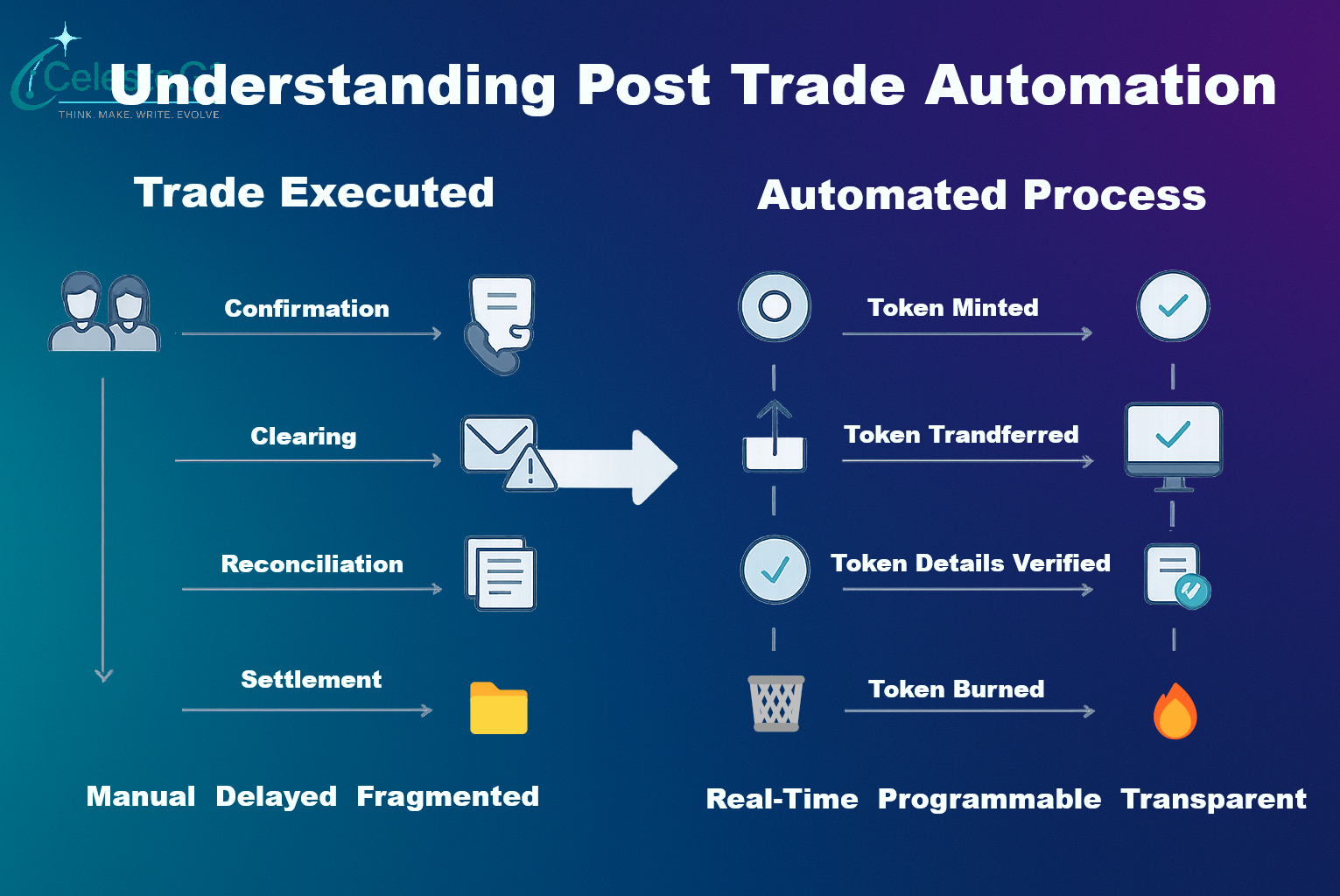
In capital markets, executing a trade is just the first step. What follows (post-trade processing) is often complex, fragmented, and costly. Traditionally, it involves a web of intermediaries, disconnected systems, and settlement delays.
Today, however, the financial infrastructure is evolving. Technologies like tokenisation and API-driven automation are streamlining the way assets are issued, transferred, and managed. This promises faster, more efficient post-trade workflows.
This guide explains/answers:
- Why traditional post-trade processes are a bottleneck.
- What is post-trade automation?
- What is tokenisation?
- Why tonkenise financial assets?
- How ABC-Labs enable post-trade automation.
Tip
If you're building on our platform, also see the Token Lifecycle and Getting Started documentation for sandbox access and production integration.
New to tokenisation?
We’ve prepared a brief explainer of key concepts such as tokenisation, smart contracts, and distributed validation. Read the Glossary of Key Concepts.
What comes next?
Related Reading
- Token Lifecycle: Learn how tokens are minted, transferred, queried, and burned throughout their lifecycle.
- How-To Guides: Step-by-step examples with code snippets for each major token operation.
- API Reference Guide: Detailed overview of endpoints, request payloads, and response formats.
- Glossary of Key Concepts: Definitions and explanations of common terminology used throughout the docs.