Please Remember...
This is a fictional example and not real documentation. The purpose is to demonstrate my technical writing.
← introduction to a token lifecycle | token lifecycle (explanation)
What is a Token Lifecycle?
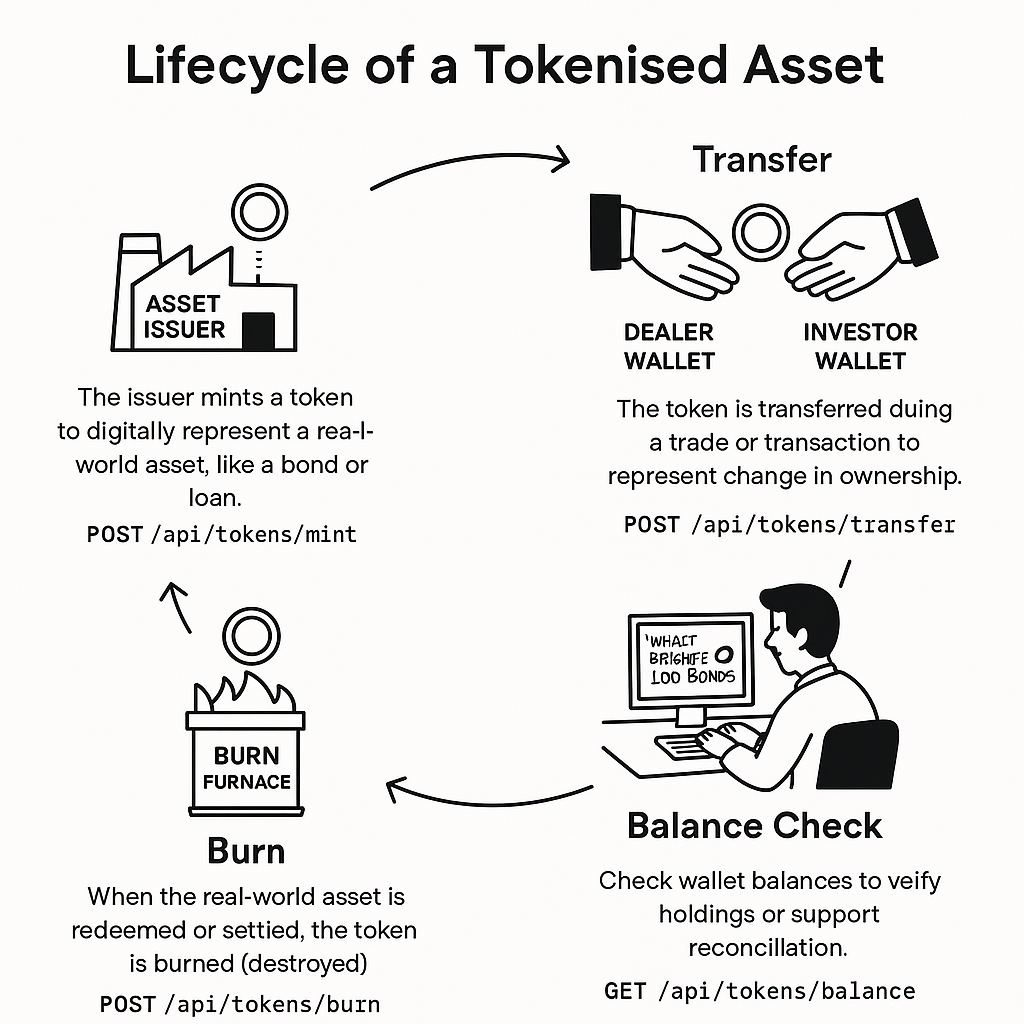
A token lifecycle describes the key events a financial asset undergoes when it is digitised and managed on-chain. In traditional finance, an asset like a bond or derivative goes through stages such as issuance, settlement, redemption, and reporting. When tokenised, each of these stages corresponds to specific on-chain actions using tokens.
Key Stages
- Minting: The digital creation of a token to represent the asset.
- Transfer: The movement of the token between parties (e.g., trade settlement).
- Burning: Destruction of the token when the asset is redeemed, cancelled, or matured.
- Balance Checking: Verifying token holdings for reconciliation, auditing, or regulatory compliance.
When Balance Checks Typically Occur
- After minting: To ensure the token matches the issued asset.
- After transfer/settlement: To confirm delivery and cash match.
- Before burning: To ensure that only the right party destroys the token.
- Periodically: For internal audits, custody reports, and compliance checks.
What comes next?
Related Reading
- Post-Trade Automation: Learn about post-trade automation and how it compares with traditional post-trade workflows.
- How-To Guides: Step-by-step examples with code snippets for each major token operation.
- API Reference Guide: Detailed overview of endpoints, request payloads, and response formats.
- Glossary of Key Concepts: Definitions and explanations of common terminology used throughout the docs.